The AI revolution you actually wanted. When technology finally works for creators
Same tech. Different rules. Better outcomes. Different winners this time.
Loading...
Verify on BlockchainLarge platforms trained AI to identify what attracts attention and drives advertising revenue.
Your attribution was optional.
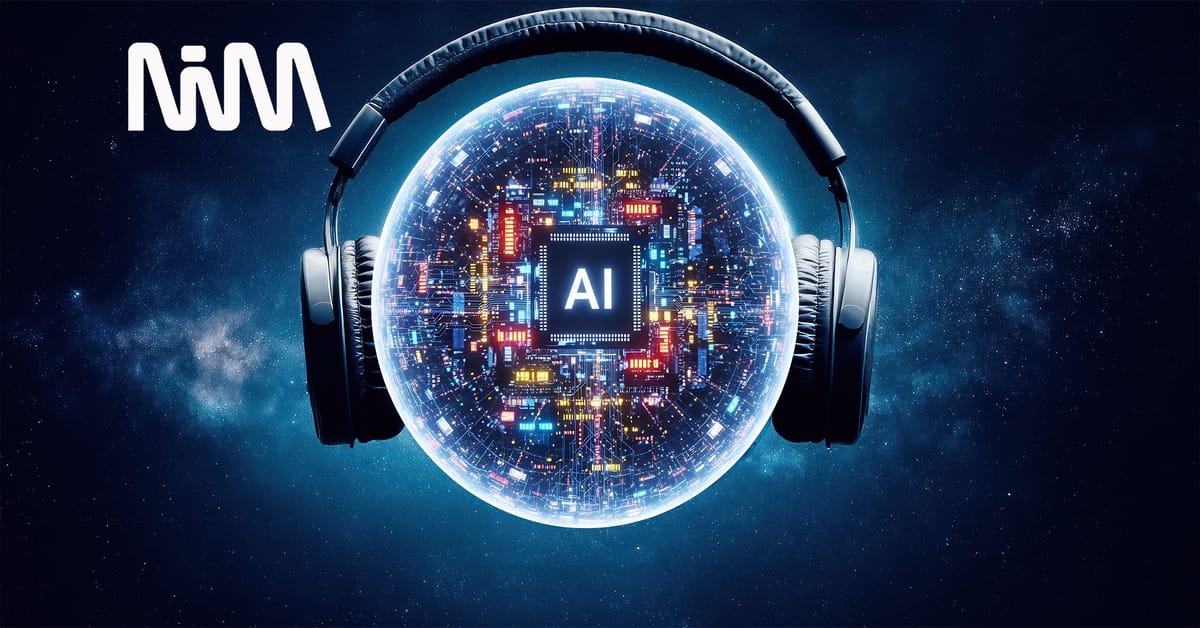
New platforms like NIM's Internet Music teach AI to identify ownership.
Your attribution is necessary.
Same tech. Different rules. Different winners.
The old problem
Social media refined AI that predicts what you'll watch and share, generating billions in advertising revenue. Creators became content suppliers where virality mattered more than ownership. Your music reached millions without proper credit. Viral sounds spread without attribution. Going viral without recognition meant exposure without opportunity.
Rights holders observed assets creating engagement with little compensation. Copyright tracking was done manually, if at all. The enforcement responsibility rested with creators who lacked the resources to monitor global platforms.
The technology shift
The precise AI powering recommendation algorithms now allows automated ownership tracking at scale. The 2025 AI Index reports that costs decreased 280-fold while capabilities improved significantly. Smaller platforms now offer features previously available only to tech giants.
Natural language processing interprets songs from casual descriptions. Audio fingerprinting identifies recordings in seconds. Computer vision automatically recognizes visual content. All of this happens continuously, affordably, and at scale.
Manual rights management couldn't handle the volume of modern content. AI flips this, automated systems continuously scan, identify matches instantly, and automatically document ownership. Processing, once requiring specialized staff, now happens in milliseconds.
Why NIM's Internet Music matters
Platforms like NIM integrate ownership tracking into discovery. The AI powering search also records copyright using blockchain timestamps. Attribution becomes mandatory because system design requires it. You cannot separate music from ownership records.
Smart contracts handle royalty distribution automatically. Streams initiate instant payment calculations. Collaborative works split royalties without delay. Geographic licensing uses appropriate rates through code. Enforcement is carried out via code, not legal teams.
Creators enjoy simplicity: upload music, viewers find it, and payments come daily. Behind the scenes, AI manages documentation, blockchain permanently records ownership, and cryptocurrency allows instant worldwide payments.
What changes for creators
Discovery: Natural language search finds your tracks through descriptions like "upbeat indie folk with female vocals," even when listeners don't know your name.
Payments: Transparent settlements within 24 hours, rather than quarterly cycles. See exactly where streams occurred and how royalties are calculated.
Revenue: 80-90% shares instead of the industry standard of 50-70%. Technology eliminating intermediaries returns value to artists.
Protection: Automated copyright tracking without legal fees. The system monitors usage across platforms and documents unauthorized uses.
What changes for investors
Verification: Music catalogs gain verifiable, transparent value. Every stream records permanently with complete geographic and payment data.
Collection: Automated systems identify revenue opportunities that manual processes miss. Geographic licensing compliance happens programmatically.
Ownership: Blockchain verification eliminates provenance disputes. The chain of title becomes mathematically verifiable rather than dependent on paper documentation.
Innovation: Smart contracts enable fractional ownership with automatic proportional distributions. Instant settlement and transparent reporting.
Why timing matters now
Technology has matured from experimental to operational. AI costs have decreased by 280 times since 2022. Cryptocurrency processes billions daily within regulatory frameworks. Wyoming offers legal protections for digital assets. These elements have now come together into functional systems.
Early adopters gain advantages before mainstream adoption. Higher revenue shares exist because platforms compete for creators. The window narrows as adoption accelerates, moving early means negotiating from a position of strength.
Taking action
You don't need technical expertise. Platforms hide complexity behind simple interfaces. Upload music, receive payments, view analytics, better economics and transparency than traditional platforms.
Begin by testing new platforms on a small scale with partial catalog distribution. Compare payment timing, revenue shares, and transparency. Join creator communities to discuss experiences. For investors, assess acquisitions where blockchain verification adds value and lowers risk.
The transformation happening now
Industry structure shifts as creators control rights, earn fair compensation, and thrive independently. Geographic barriers disappear when payment systems operate the same worldwide. Collaborative creation becomes seamless with automatic royalty sharing.
This isn't speculation, it's the current reality speeding toward mainstream acceptance. Platforms are now available. Technology works reliably. Economics are proven to be sustainable. What remains is the willingness to adopt new approaches.
Choose your future
AI trained to identify what captures attention, creates engagement, and boosts platform profits. AI trained to find who owns what ensures rights protection and supports creator success. The technical capabilities alone don't determine outcomes, it's the rules governing technology that decide the winners.
You can continue following the old rules where attribution is optional, and platforms focus on advertising revenue, or adopt new rules where attribution is mandatory, and platforms emphasize creator compensation.
The technology finally benefits creators. The platforms now support both ownership and discovery. The economics finally favor artists over middlemen.
This is the AI revolution you truly wanted, where innovation promotes justice, technology fosters fairness, and the future belongs to those who build it.
The next era of music belongs to creators and investors who are willing to demand better. That era began in 2024 and is accelerating through 2026.
Same tech. Different rules. Better outcomes.
Different winners this time.
Evidence
| Article | The AI revolution you actually wanted. When technology finally works for creators (CCN0196) |
|---|---|
| Archived from | Moved here from news.copyrightchains.com (original address), first published there 2026-01-23 14:10:15 UTC |
| Registered on CopyrightChains | Original CopyrightID 0xa772105230fd6e4c8010a0f2bb0fa986bda2428304542bebc0b688693f365203 (explorer), registered on news.copyrightchains.com 2026-01-23 14:41:35 UTC. It keeps that CopyrightID and was not registered again here. |
| Registered text hash | SHA-256 0x114dadc178dbc1a44a1e76043c02d6125c8b0526dd1ada6a11ae4da72fe4537d |
| Snapshot of this copy | SHA-256 c42489e0c5fe4285c8ef9f858e1ff0f734952d2716d8f301bdbf9b43132850b8 · snapshot · OpenTimestamps proof |
| This copy existed by Bitcoin block | 975195 (2026-11-09 16:38:44 UTC). A new Bitcoin proof made when the article moved here: it dates this copy, not when the article was written. |
| Archive record | SHA-256 09d37a082b4baed4173d5f146a5b6f04621834c7e04ee82311cd06d4d283fe5f · record · OpenTimestamps proof |
| Archive record existed by Bitcoin block | 975195 (2026-11-09 16:38:44 UTC) |
| Check it yourself | verification API · all versions |
This shows that this copy of an article moved from news.copyrightchains.com existed in this exact form by the Bitcoin blocks given, and which CopyrightID registered the original there. The Bitcoin blocks date this copy, not the writing or the original registration: the CopyrightID transaction dates the registration. It does not establish that the article is true, who wrote it, or who owns it. CopyrightChains is a permissioned registry operated by the publisher; independent time evidence comes from the Bitcoin anchor.