Japan's regulatory framework establishes a global precedent for the monetization of copyrights.
Publishing royalties take 6-18 months to payout. The $45.5 billion music copyright market has $16.8 billion trapped in working capital cycles, costing $1.68 billion annually at standard financing rates. Blockchain settlement eliminates this entirely, capturing 32% points of margin expansion.

Loading...
Verify on BlockchainJapan's financial services authority has initiated the reclassification of 105 cryptocurrencies as financial products under the Financial Instruments and Exchange Act, moving digital assets from payment mechanism classification into securities regulation. This structural shift positions digital assets within the same regulatory framework as stocks, bonds, and other investment instruments, thereby establishing institutional legitimacy that enables traditional financial institutions to participate in tokenized asset markets.
The proposed tax reduction, from rates as high as 55% to a flat 20%, removes substantial friction from participation in digital assets. This alignment with traditional securities taxation creates operational parity, with copyright-backed tokens receiving the same treatment as equity and debt instruments. The authorization for banks and insurance firms to offer crypto products through securities divisions expands the financial infrastructure that real-world asset platforms require for institutional adoption.
Regulatory classification enables copyright asset reclassification
Japan's approach follows the G7 agreement reached at the 2015 Elmau Summit, which established international coordination on digital asset regulation. When major economies align their regulatory frameworks, cross-border capital flows efficiently through standardized compliance structures. The Financial Action Task Force guidance requiring registration and licensing for platforms exchanging digital assets created a foundational architecture that specialized applications now utilize.
The reclassification of cryptocurrencies as financial products establishes precedent for intellectual property tokenization. Copyright generates measurable cash flows through licensing, distribution, and usage rights. When digital representations of these cash flows operate within securities frameworks, they function as programmable financial instruments comparable to real estate investment trusts or asset-backed securities. Japan's regulatory clarity removes the ambiguity that previously prevented institutional capital from being allocated to tokenized copyright portfolios.
The Financial Stability Board's October 2025 thematic review documented uneven implementation of crypto-asset frameworks across jurisdictions, creating regulatory arbitrage opportunities. Japan's comprehensive approach addresses this fragmentation by establishing clear standards for digital asset classification, disclosure requirements, and cross-border operation. When G7 economies adopt harmonized frameworks, global institutional participants can deploy capital efficiently across jurisdictions without having to navigate conflicting regulatory interpretations.
CopyrightChains' infrastructure processes real-world assets at an institutional scale
CopyrightChains v9.2 functions as foundational infrastructure in production for white-label development for our partners, processing over 1,000 transactions per second via a blockchain architecture that combines proof-of-stake consensus with specialized smart contracts for managing intellectual property. The platform shows a commercial implementation of copyright settlement using major stablecoins, including USDC, PYUSD, and USDT, allowing artists to receive payments in their preferred currency while ensuring regulatory compliance across 140 jurisdictions through the Wyoming DAO legal framework.
Music copyrights generated $45.5 billion in global revenue in 2023, an 11% year-over-year increase. Traditional copyright management suffers from systematic inefficiencies: individual creators monitor 5-15 distribution platforms while unauthorized use occurs across 240 digital platforms, resulting in zero revenue. CopyrightChains' infrastructure achieves very high (>80%) detection accuracy, compared with 10 to 20% under traditional management, resulting in 5 to 10 times higher usage identification. Smart contract execution compresses settlement timelines from 45 to 180 days to seconds, eliminating working capital costs that reduce effective yields.
The power of the content staking framework
The power of content staking framework transforms copyright economics through operational efficiency rather than market speculation. Traditional streaming offers consumption-based payments of 0.003 to 0.005 per stream, generating annual returns of 2 to 8%. Enhanced collection infrastructure captures value that existing systems fail to monetize, delivering metadata staking at 15 to 30% yearly yield from AI training services, ownership staking at eight to 18% from licensing revenue shares, royalty futures staking at 25 to 45% from future earnings liquidity, and attribution staking at five to 12% from identity verification services. Combined mechanisms deliver 45 to 75% annual returns on copyright portfolios, capturing a 37 to 73 percentage-point return arbitrage over baseline management.
Not through volatile speculation, but through systematic collection of revenues that traditional infrastructure leaves uncaptured and capitalizing on valuable resources that generate measurable cash flows.
Institutional architecture addresses fiduciary requirements
The Wyoming Series LLC legal structure provides bankruptcy-remote protections, with individual copyright portfolios maintaining independent legal status. Each tokenized copyright operates as a distinct entity, ensuring that performance variations in specific assets do not affect other portfolio holdings. The SEC protocol staking guidance establishes criteria for determining when blockchain-based activities constitute administrative functions rather than securities offerings. Japan's regulatory developments are creating parallel frameworks across Asian markets, expanding the jurisdictions in which compliant tokenization structures operate under clear legal guidelines.
The addressable market comprises tens of millions of undermonetized registered and unregistered copyrights globally, generating suboptimal returns due to inadequate enforcement infrastructure. Conservative acquisition targets include copyrights generating $50,000 to $500,000 annually, representing hundreds of thousands to low millions of copyrights globally, with acquisition opportunities spanning $6 billion to $50 billion, targeting clearly identifiable underperforming portfolios. Spotify hosts 12 million artists, yet only 71,200 (0.6%) generated over $10,000 in 2024, leaving approximately 11.9 million independent musicians systematically excluded from meaningful compensation.
Global regulatory alignment accelerates capital deployment
Financial institutions require clearly defined regulatory frameworks before committing capital to emerging asset classes. Japan's comprehensive approach removes the uncertainty that previously limited institutional participation. When banks, insurance firms, and asset managers operate within established legal frameworks, capital deployment increases substantially as risk committees approve allocations that regulatory ambiguity previously prevented. Classifying digital assets as financial products enables pension funds, endowments, and insurance companies to participate in tokenized markets within existing investment mandates.
The copyright tokenization market addresses a global opportunity exceeding two trillion dollars in intellectual property assets that generate revenue through licensing and distribution rights. Traditional intellectual property investments required complete catalog acquisitions or complex private placement structures. Tokenization enables fractional ownership with enhanced liquidity, making the asset class accessible to a broader range of investors seeking yield uncorrelated with traditional markets. Japan's regulatory framework demonstrates that major economies recognize digital asset infrastructure as a permanent component of the financial system rather than experimental technologies.
The convergence of regulatory clarity in Japan, production-ready infrastructure through CopyrightChains, and the transition to major stablecoins like USDC create conditions for accelerated adoption of copyright financialization. The NIM ecosystem demonstrates that specialized real-world asset platforms operate within compliant frameworks while delivering measurably superior outcomes for creators systematically excluded from traditional compensation systems and investors seeking exposure to yield-generating intellectual property assets with institutional-grade operational characteristics.
References:
International royalties represent $11.4 billion of the copyright market. Traditional cross-border fees cost 3% ($342 million), while stablecoin payments reduce this by 96% to just $13.7 million, capturing $328 million annually. Processing times drop 78.3% through blockchain settlement.
 Barry Elad

Traditional copyright settlement costs 3% of transaction value through intermediary fees, $1.36 billion annually across the music market. Blockchain-based systems reduce this to 0.5%, delivering $1.13 billion in annual savings. Smart contracts automate 60% of manual reconciliation, cutting administrative overhead by 15-30%.
 Ibrahim Elsiddig Ahmed
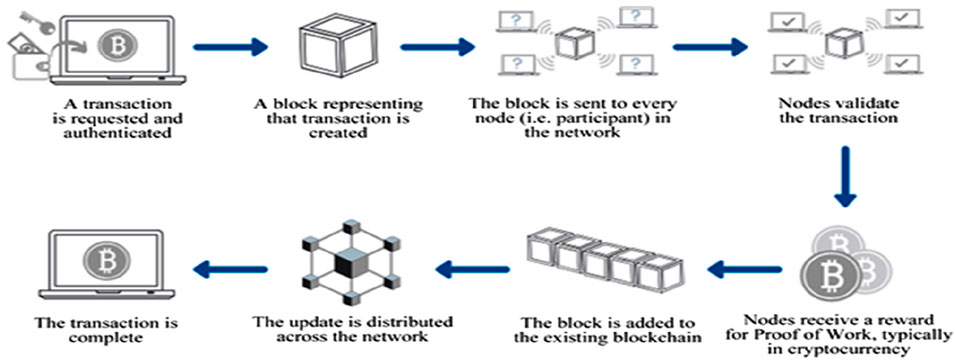
Publishing royalties take 6-9 months to reach creators, while international royalties can take 12-18 months. The $45.5 billion music copyright market has $16.8 billion trapped in working capital cycles, costing $1.68 billion annually at standard financing rates. Blockchain settlement eliminates this entirely, capturing 32 percentage points of margin expansion before any revenue improvements.

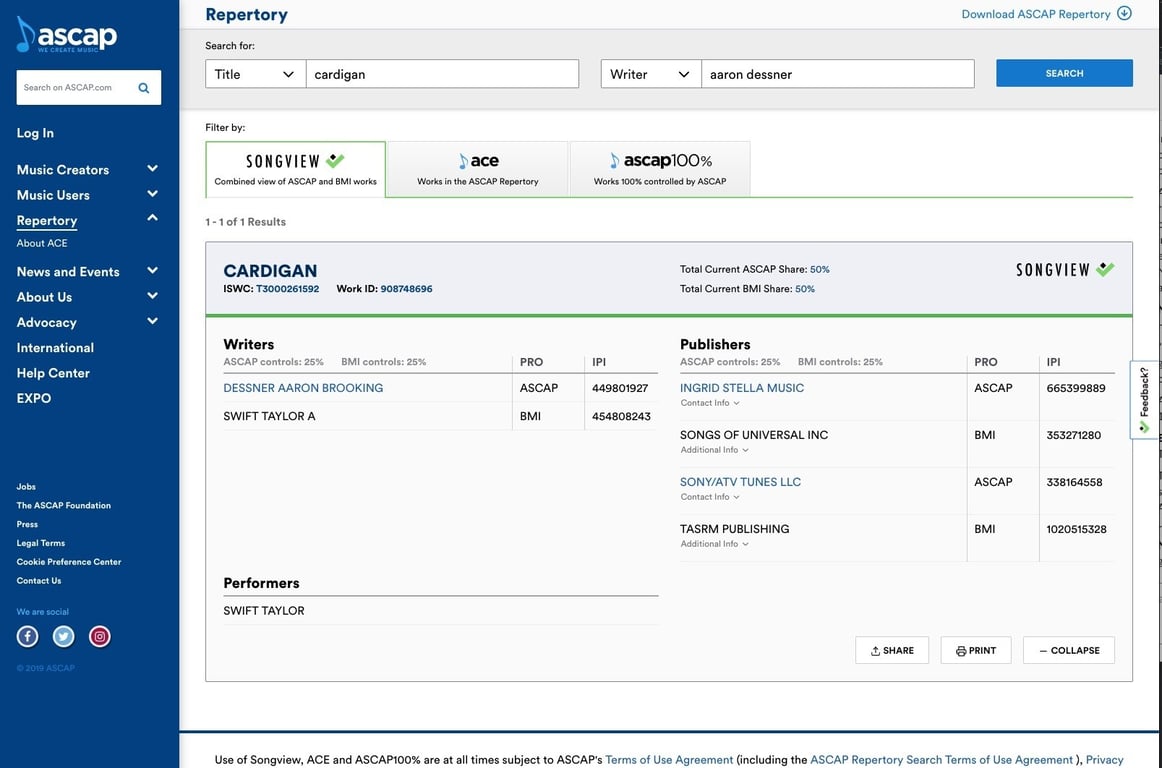
Music IP carries an 8-12% cost of capital, making the $16.8 billion trapped in working capital cycles particularly expensive. Blockchain infrastructure converts this inefficiency into investable margin; the 32-point cost reduction, combined with enhanced enforcement, delivers 37-73 percentage-point return arbitrage over traditional management.
https://bsic.it/the-rise-of-music-royalties-in-alternative-investing/
Evidence
| Article | Japan's regulatory framework establishes a global precedent for the monetization of copyrights. (CCN0176) |
|---|---|
| Archived from | Moved here from news.copyrightchains.com (original address), first published there 2025-11-19 13:19:00 UTC |
| Registered on CopyrightChains | Original CopyrightID 0x7ec3f870ee496453caaec4ad91456855ccb6f56e8a0a19721073ad5de74b841e (explorer), registered on news.copyrightchains.com 2025-12-30 11:55:08 UTC. It keeps that CopyrightID and was not registered again here. |
| Registered text hash | SHA-256 0x3ef72e6c7a5b7dcdf51ef9848927182c7baf0ab210c46a9c83c08c72e79ac11b |
| Snapshot of this copy | SHA-256 65edcf21f8f3eed3facf366ce63688fedb0474274ec02126e561aa96d964155b · snapshot · OpenTimestamps proof |
| This copy existed by Bitcoin block | 975195 (2026-11-09 16:38:44 UTC). A new Bitcoin proof made when the article moved here: it dates this copy, not when the article was written. |
| Archive record | SHA-256 05b8d599b4d6b4f71516ccaf046731f661279cb052b6ed32bacc234ab13026be · record · OpenTimestamps proof |
| Archive record existed by Bitcoin block | 975195 (2026-11-09 16:38:44 UTC) |
| Check it yourself | verification API · all versions |
This shows that this copy of an article moved from news.copyrightchains.com existed in this exact form by the Bitcoin blocks given, and which CopyrightID registered the original there. The Bitcoin blocks date this copy, not the writing or the original registration: the CopyrightID transaction dates the registration. It does not establish that the article is true, who wrote it, or who owns it. CopyrightChains is a permissioned registry operated by the publisher; independent time evidence comes from the Bitcoin anchor.