AI, NIM, and music metadata
NIM’s platform in the age of AI-generated music
Loading...
Verify on BlockchainThe emergence of artificial intelligence (AI) in the music industry has introduced new possibilities for creating songs based on existing music metadata. However, this development has also raised concerns about potential copyright infringement and fair compensation for copyright owners whose songs’ metadata is used to train AI models.
NIM’s technology platform aims to address these issues and provide a solution for copyright owners to monetize their music metadata in the context of AI-generated music.
NIM’s approach utilizes advanced technology to create a transparent and efficient system for music metadata monetization.
By integrating AI-generated music with its centralized infrastructure, NIM seeks to ensure copyright owners are compensated for using their songs’ metadata in AI compositions.
Here’s how it works:
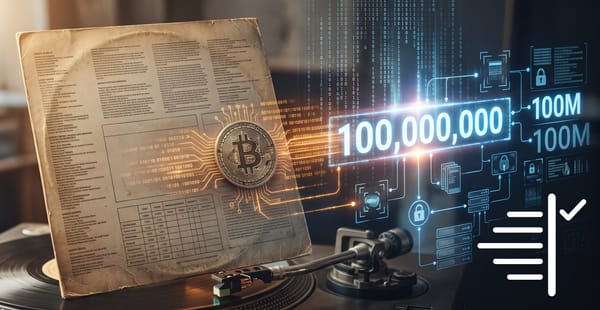
Metadata tracking and AI song generation: NIM’s platform enables AI algorithms to learn from music metadata, including genre, mood, tempo, key, and lyrics. These trained AI models then generate new songs incorporating characteristics from the original songs’ metadata. NIM records the metadata used in the AI training process, creating a trail of metadata provenance to identify potential copyright infringement.
Monitoring metadata usage and infringement detection: NIM’s infrastructure records each instance of an AI model accessing and learning from a song’s metadata. This immutable record allows for the identification of the original songs that influenced the AI-generated composition. Automated systems monitor the usage of metadata and detect potential instances of copyright infringement, aiming to protect the rights of copyright owners.
Royalty calculation and distribution: NIM has developed a royalty allocation algorithm that determines the distribution of royalties for AI-generated songs that infringe upon copyrighted material. The algorithm considers the provenance of metadata and the level of influence each original song had on the infringing AI composition. The platform facilitates the distribution of royalties to the respective copyright owners’ accounts.
Licensing and revenue generation: NIM’s white-labeled “marketplaces” enable licensing AI-generated songs for various commercial uses. The licensing revenue is distributed among the copyright owners of the original songs based on the predetermined royalty allocation. Revenue-sharing agreements between AI model developers and copyright owners are intended to ensure compensation for all parties involved while deterring copyright infringement.
Transparency and reporting: Copyright owners on the NIM platform can access reports on how their songs’ metadata is used in AI training and song generation. Royalty statements and analytics aim to provide transparency and insights into the performance of their intellectual property in the AI music generation process, including any instances of potential copyright infringement.
Dispute resolution and legal support: NIM has mechanisms to verify metadata ownership and resolve potential disputes related to copyright infringement. The platform maintains a record of metadata ownership and provides legal support to copyright owners in infringement cases. Mediation protocols and legal assistance are designed to facilitate the resolution of disputes and protect copyright owners’ rights.
The integration of AI-generated music with advanced tracking and monitoring technology has the potential to impact the music industry. NIM’s platform aims to provide copyright owners with a means to monetize their music metadata and receive compensation for using their songs’ metadata in AI compositions, even in copyright infringement cases.
By offering an automated royalty distribution system and legal support, NIM seeks to enable copyright owners to participate in the AI-generated music landscape while safeguarding their intellectual property rights.
By leveraging advanced technologies, NIM aims to contribute to the ongoing development of music royalty distribution and copyright protection in the digital age.
NIM offers a comprehensive solution for copyright owners interested in exploring the monetization of their music metadata in the era of AI-generated music and protecting their rights against infringement.
Evidence
| Article | AI, NIM, and music metadata (CCN0043) |
|---|---|
| Archived from | Moved here from news.copyrightchains.com (original address), first published there 2024-04-18 09:57:02 UTC |
| Registered on CopyrightChains | Original CopyrightID 0x4f433471557b1edf0ad7f146c6d2f765c32bc2b410c0b1cbbaf0c8430ee2ae69 (explorer), registered on news.copyrightchains.com 2025-12-30 11:55:31 UTC. It keeps that CopyrightID and was not registered again here. |
| Registered text hash | SHA-256 0x5d53b05623f8b741feebe1d322b31c6e8c58b1cf12147f91fc75e248a503f3b8 |
| Snapshot of this copy | SHA-256 a0493362101aa4e06e37f3a443111c267040e1e197a1a51ac0b56eec4da5228b · snapshot · OpenTimestamps proof |
| This copy existed by Bitcoin block | 975195 (2026-11-09 16:38:44 UTC). A new Bitcoin proof made when the article moved here: it dates this copy, not when the article was written. |
| Archive record | SHA-256 1115ee136b10207f4c29565e81a83fac89b1ab5b7617a1bb2e83d36c7618eaaf · record · OpenTimestamps proof |
| Archive record existed by Bitcoin block | 975195 (2026-11-09 16:38:44 UTC) |
| Check it yourself | verification API · all versions |
This shows that this copy of an article moved from news.copyrightchains.com existed in this exact form by the Bitcoin blocks given, and which CopyrightID registered the original there. The Bitcoin blocks date this copy, not the writing or the original registration: the CopyrightID transaction dates the registration. It does not establish that the article is true, who wrote it, or who owns it. CopyrightChains is a permissioned registry operated by the publisher; independent time evidence comes from the Bitcoin anchor.